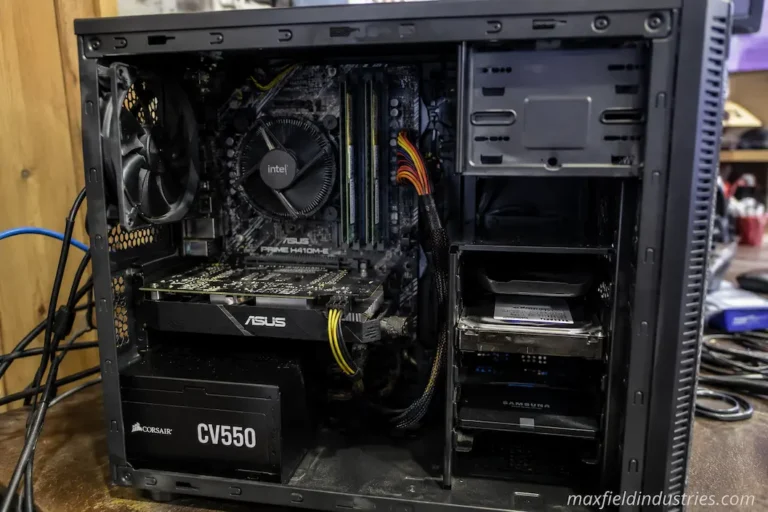
Specification sheets are the universal language of computer hardware. When evaluating processors, storage devices, memory modules, or graphics cards, people often start by placing two products side by side and comparing their rated parameters. Clock speed, capacity, bandwidth, interface version, and other technical characteristics seem like an easy way to identify the best choice.
This approach is logical because specifications are objective. They are measurable, verifiable, comparable, and unambiguous.
However, anyone who delves deeply into computer systems will eventually discover certain peculiarities. Two components may look very similar on paper—with published specifications that differ only slightly—yet their real-world performance when executing the same task can vary enormously.
This does not mean the specifications are incorrect.
Specifications tell you something about a product, but a product is the result of thousands of interacting technical decisions. These decisions determine how the hardware responds to environmental changes, how it interacts with software, and how it works with the rest of the computer.
Understanding this distinction shows why comparing specifications is often only the first step.
Specifications Describe Features, Not Engineering Decisions
Published specifications are intended to provide a concise, standardized abstraction of complex hardware.
For instance, a CPU specification might list the operating frequency, core count, cache size, and power consumption. Storage devices might indicate interface compatibility, sequential transfer speeds, and available capacity. These metrics are useful because they provide a common reference point for different products.
However, they do not explain how these results came about. Every published figure is the result of an engineering process involving architectural choices, resource planning, firmware behavior, manufacturing processes, communication paths, and countless other design factors. Many of these characteristics are not immediately apparent to someone reading the specification sheet, yet they directly influence how the hardware behaves under realistic workloads.
Consequently, the advertised specifications of two products—even those resulting from different engineering processes—can appear remarkably similar.
These differences usually only become evident when the device is actually performing tasks.
Similar Numbers Do Not Mean Similar Priorities
Engineers usually optimize some of a component’s attributes more than others.
All hardware designs are based on differing priorities.
One design might focus on long-term operational stability, making short-term performance optimization a secondary concern. Another design approach might prioritize maintaining predictable performance across a range of conditions. Yet another might focus on reducing production costs without drastically altering the published specifications.
Engineering resources are typically limited; improving one attribute usually requires sacrificing others.
While the specifications may not explicitly state these priorities, they still significantly impact real-world usage.
As a result, two products with identical capacity and operating frequency can exhibit vastly different performance under sustained heavy loads, simply because they were built with different development goals in mind.
A more practical approach to comparing components is to recognize that hardware reflects design priorities, not merely individual specifications.
Internal Communication Generally Determines Performance
Computer components rarely perform useful work independently of one another.
Under normal operating conditions, data is constantly being transferred between processors, memory, storage devices, graphics hardware, and numerous auxiliary controllers. A system’s responsiveness depends on both the performance of individual components and the efficiency of this data exchange.
Imagine two systems with hardware specifications that appear almost identical.
One platform may perform better in terms of internal communication, resulting in lower latency, better resource organization, and less unnecessary waiting time. Even with seemingly identical specifications, one platform can handle the same workload more smoothly than the other.
This explains why measuring hardware performance based solely on the specifications of individual components can be misleading.
Interaction determines performance.
In fact, performance depends more on the quality of interaction than on subtle differences in isolated specifications.
Software Does Not Treat Every Component Equally
Applications rarely interact with hardware uniformly.
Different software is built upon varying assumptions, optimization methods, and development goals. Some applications effectively distribute workloads across available resources. Others rely heavily on specific execution paths, thereby emphasizing particular architectural features. Consequently, the actual workload placed on components—even those with very similar specifications—can vary significantly depending on the software being used.
One application might benefit from rapid access to frequently used data, while another might rely more heavily on sustained processing power. A third application might spend the majority of its execution time waiting for external resources, making hardware differences far less significant than expected.
The key point to realize here is that software actively contributes to translating hardware capabilities into observable performance.
Published specifications cannot fully predict these interactions, as they do not take into account the specific applications that will ultimately run on the hardware.
Performance Changes as Workloads Evolve
Another reason why similar needs can lead to different results is that the computational load is rarely constant.
A workday might begin with routine office tasks and then shift to large-scale data processing, media editing, software compilation, or virtual collaboration. Different activities place different demands on available resources.
Hardware that performs well at one time of day may underperform at another.
Some designs maintain consistent performance regardless of the environment. Others are optimized for high performance during short-lived tasks, after which their operational characteristics gradually adjust to sustained workloads.
Neither approach is always optimal.
They are simply different technical strategies designed to meet different priorities.
Consequently, hardware analyses based on only a single type of workload can sometimes yield results that differ from long-term real-world experience.
Looking Beneath Identical Specification Tables
Specification comparisons encourage the impression that hardware can be ranked through numerical differences alone.
In reality, specification tables often conceal numerous engineering characteristics that contribute to overall behavior.
| Published Specification | What It Doesn’t Fully Reveal |
|---|---|
| Operating frequency | How efficiently work is completed at that frequency. |
| Capacity | How resources are organized and managed internally. |
| Interface version | The effectiveness of communication throughout the platform. |
| Transfer rate | Performance consistency under varied workloads. |
| Power rating | How operating behavior changes during extended activity. |
The purpose of specifications is not to describe every engineering detail. They provide standardized reference information that simplifies comparison across many products.
Understanding their limitations allows readers to interpret them more realistically rather than assuming they represent the complete performance picture.
Engineering Is About Systems, Not Isolated Numbers
One of the defining characteristics of computer engineering is that no component operates independently for very long.
Every action performed by a computer involves cooperation between multiple subsystems, each contributing part of the overall process. Because of this interconnected design, practical performance reflects the quality of the entire system rather than the specifications of one component viewed in isolation.
This systems perspective explains why experienced evaluators rarely draw conclusions after comparing specification tables alone. They recognize that published values represent important reference points, but meaningful understanding comes from examining how those components function together under realistic conditions.
That broader perspective transforms specification comparison from a numerical exercise into a more profound understanding of how computers actually work.
Design Philosophy Influences the Final Outcome
No two engineering teams solve complex problems in exactly the same way.
Even when manufacturers pursue similar performance targets, they often arrive there through different design philosophies. One development team may focus on maintaining consistent operation across long working sessions, while another may prioritize extracting as much performance as possible during shorter bursts of activity. Others may place greater emphasis on reducing power consumption, simplifying manufacturing, or improving compatibility across a wider range of hardware environments.
These decisions are usually not visible in published specifications.
They become apparent only when components are placed into practical situations where design choices influence how resources are allocated, how workloads are balanced, and how operating conditions change over time.
Understanding hardware therefore involves appreciating the engineering philosophy behind a product, not simply the measurable characteristics listed on its packaging.
Environmental Conditions Can Change Performance
Hardware does not operate inside identical environments.
Two seemingly identical computers may produce different results simply because the conditions surrounding them are different.
Internal airflow, cooling efficiency, firmware configuration, operating system settings, installed software, and even room temperature all influence how electronic components behave during extended operation. These factors affect how effectively a system maintains stable operating conditions while performing demanding work.
For example, a component capable of excellent sustained performance in one system may behave more conservatively inside another platform where cooling resources are more limited. Neither component has changed; only its operating environment has.
This illustrates an important principle:
Performance is created through the interaction of hardware with its environment, rather than by hardware alone.
Ignoring those surrounding conditions often leads to inaccurate conclusions when comparing products that appear nearly identical on paper.
Small Architectural Differences Can Produce Larger Practical Effects
Specification sheets typically emphasize characteristics that are straightforward to compare numerically.
Architectural decisions are different.
They involve how internal resources communicate, how instructions are organized, how temporary data is managed, and how workloads move through different processing stages. Many of these design choices cannot be summarized with a single published figure, yet together they shape the behavior of the entire component.
Two products may therefore report identical operating frequencies while organizing internal work in noticeably different ways.
During simple tasks, these differences may remain almost invisible.
As workloads become more varied or continue for longer periods, however, these underlying design decisions can gradually influence responsiveness, efficiency, and overall consistency.
This is one reason engineers often study architecture alongside specifications rather than treating both as interchangeable descriptions of performance.
Testing Conditions Matter More Than Many People Realize
Performance results are meaningful only when they are interpreted alongside the conditions under which they were obtained.
A comparison performed using one application may highlight strengths that remain largely unused in another. Likewise, testing a computer immediately after startup may produce observations that differ from measurements collected after several hours of continuous work.
Even routine variables contribute to these differences.
Software versions evolve.
Background services change.
Operating systems introduce new scheduling methods.
Firmware updates refine hardware behavior.
Each of these elements can subtly influence the outcome of performance testing despite leaving published specifications completely unchanged.
For this reason, experienced reviewers rarely rely on one isolated result. They examine performance across multiple workloads and repeated observations before drawing broader conclusions about how hardware behaves.
Comparing Components Requires More Than Side-by-Side Numbers
A useful comparison considers the context in which hardware will actually be used.
Instead of asking which specification is larger, it is often more informative to ask a series of practical questions.
| Evaluation Question | Why It Provides Better Insight |
|---|---|
| How does the component behave during prolonged work? | Reveals consistency instead of only peak capability. |
| Does performance remain predictable across different applications? | Demonstrates adaptability to varied workloads. |
| How efficiently does it cooperate with the surrounding hardware? | Highlights system-level performance rather than isolated capability. |
| Does everyday responsiveness match the published expectations? | Connects technical measurements with practical experience. |
| Are observed improvements repeatable? | Confirms that results reflect normal behavior instead of exceptional conditions. |
Questions like these move the evaluation beyond numerical comparison and toward understanding how a component contributes to the complete computing system.
Specifications Are Starting Points, Not Final Conclusions
Specifications remain extremely useful.
Comparing hardware from different manufacturers would be far more difficult without established specifications. Specifications provide consumers, engineers, and reviewers with a standardized technical language, enabling them to discuss products using objective reference points.
Problems arise only when people view these metrics as a complete description of performance.
Specification sheets cannot capture all the technical trade-offs, software interactions, environmental influences, or workload characteristics that affect actual component performance. Nor are they intended to.
With this understanding, reading specifications leads to more accurate expectations and better-informed evaluations.
Experienced reviewers do not simply ask whether two products share similar parameters; they ask whether those products are likely to perform similarly when integrated into a complete computer system.
Looking Beyond the Surface
It is straightforward to compare hardware based on listed specifications. Numbers are straightforward to sort, compare, and rank. They provide immediate answers, whereas in-depth technical analysis can take much longer.
But computers are not collections of isolated numbers.
They are coordinated systems whose behavior results from the interplay between architecture, firmware, software, environmental factors, and countless technical decisions defining the relationships between various components. Generally, identical specifications imply similar performance, but not necessarily a similar user experience.
This broader perspective on hardware facilitates a more critical evaluation. Instead of seeking all the answers in the specifications, you can use them as evidence to gain insight into how the technology performs in real-world applications.
Conclusion
Normally, two hardware components with roughly the same specifications should yield virtually identical results. In reality, however, reported data captures only certain aspects of more complex technical concepts. Differences only become apparent when the hardware actually performs tasks. Factors influencing this include internal architecture, software interactions, environmental conditions, communication efficiency, firmware behavior, and workload diversity.
Considering these factors facilitates a more comprehensive evaluation of hardware. Specifications remain important as reference points, but meaningful comparisons must go beyond individual metrics and focus on overall system performance in a real-world environment. This more nuanced understanding helps explain why components that appear similar on paper—even with nearly identical performance ratings—can result in drastically different user experiences.
FAQs
1. Why do two components with the same specifications perform differently?
Manufacturer specifications are summaries of key characteristics. They do not define architecture, firmware, software optimizations, thermal conditions, or system integration. All these factors influence actual performance.
2. Do specifications provide an accurate description of the hardware?
Yes. Specifications are generally precise technical references. They are simply quantifiable characteristics, not the full set of technical parameters that determine actual performance.
3. Can software cause the same hardware to perform differently?
Yes. Software design and optimization can significantly influence hardware performance under various workloads. Applications also consume available resources in different ways.
4. Is system configuration important for performance?
Absolutely. Even if the key components remain the same, factors such as thermal efficiency, firmware settings, operating system behavior, memory configuration, and surrounding hardware influence the reported performance.
5. Should hardware be evaluated solely based on specifications?
No. While specifications are a useful starting point, a full understanding of hardware performance requires an analysis of the architectural design, workload alignment, long-term stability, and actual system operation.